

baumer Distance Sensor
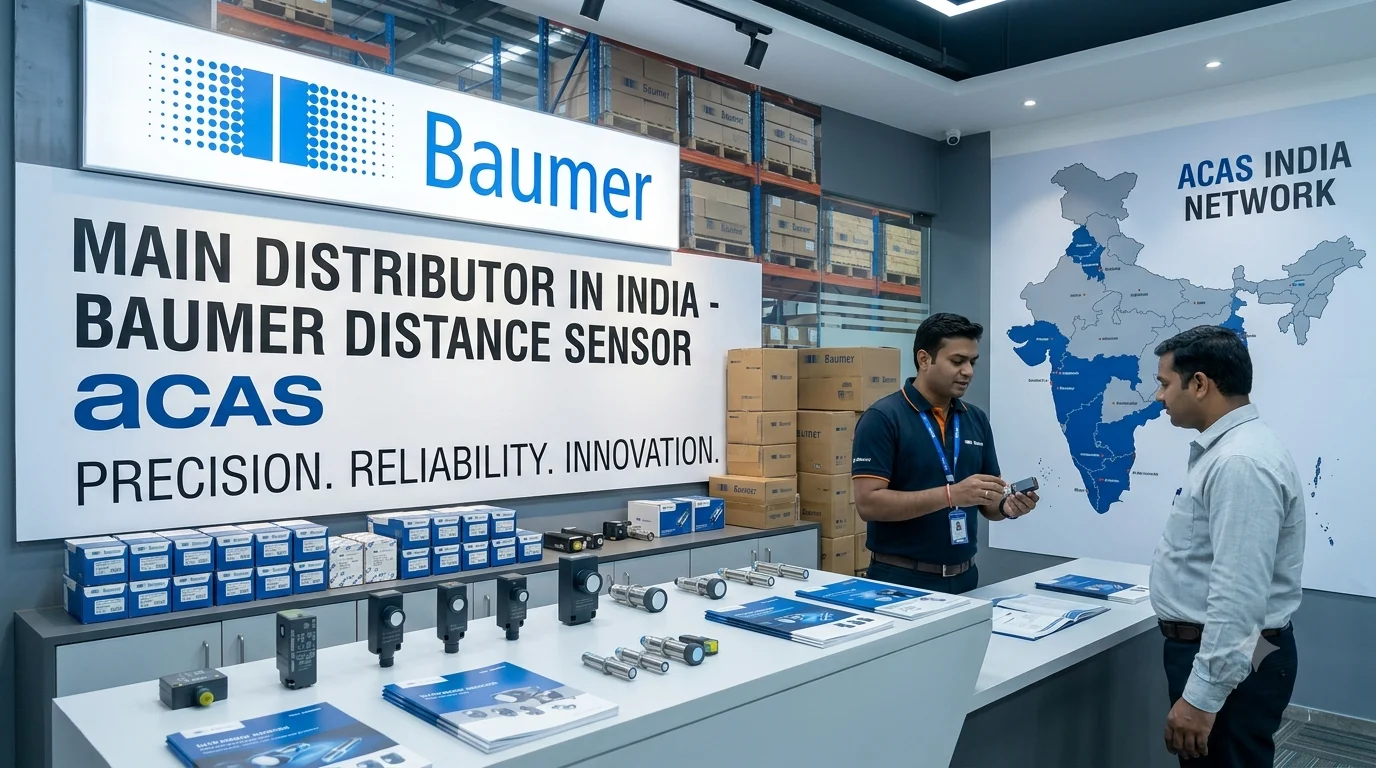
baumer Distance Sensor
Baumer distance sensors are designed for precise, non-contact measurement of distance, position, height and movement in industrial automation. Baumer offers multiple sensing technologies—including laser, ultrasonic, radar and inductive distance sensors, as well as linear magnetic encoders and cable transducers—covering applications from micrometer-level measurement to ranges of up to 60 m, depending on technology and model.
Major Types of Baumer Distance Sensors
1. Laser Distance Sensors
Laser sensors provide highly precise optical distance measurement and are suitable for demanding factory-automation and quality-control applications. Baumer's portfolio includes laser distance sensors with precision down to around 3 μm and measuring ranges up to 1,700 mm, depending on model.
Applications:
- Quality inspection
- Thickness measurement
- Positioning
- Height measurement
- Dispenser positioning
- Surface/profile measurement
- Wood and material processing
2. Ultrasonic Distance Sensors
Ultrasonic sensors measure distance using sound waves. They are particularly useful where targets are difficult for optical sensors, including transparent or very dark surfaces. Baumer ultrasonic distance sensors offer ranges up to 6,000 mm, depending on model.
Applications:
- Level measurement
- Pallet-height measurement
- Roll-diameter control
- Packaging-film monitoring
- Material-flow control
- Object detection
- Distance measurement
3. Inductive Distance Sensors
Inductive distance sensors are especially suitable for metal targets and high-precision measurements. Baumer offers solutions for axial, lateral and angular measurement, with resolutions extending into the nanometer range in suitable applications.
Applications:
- Machine tools
- Metal processing
- Position control
- Vibration measurement
- Feeder control
- Precision machine monitoring
4. Radar Distance Sensors
Radar sensors are suitable for longer-range measurements and challenging outdoor or dirty environments. Baumer radar solutions can measure up to 60 m, depending on model.
Applications:
- Crane positioning
- Vehicle positioning
- Collision monitoring
- Agricultural machinery
- Construction equipment
- Train/object detection
- Fill-level measurement
5. Cable Transducers
Cable transducers measure linear movement by extending and retracting a measuring cable. Baumer offers models with measuring lengths up to 50 m and high linearity across the measuring range.
Applications:
- Boom and outrigger positioning
- Mobile machinery
- Lifting equipment
- Industrial machines
- Linear-position measurement
Major Applications of Baumer Distance Sensors
Factory Automation
Distance sensors help automated machines determine object position, height, distance and movement. They are used in production lines, assembly systems, robotic applications and automated handling.
Packaging Machinery
Sensors can monitor packaging material, film loops, product position and roll diameter. Ultrasonic technology can be particularly useful for transparent films and difficult-to-detect materials.
Quality Control
High-precision laser and inductive sensors can measure dimensions, position, thickness and surface characteristics, supporting automated quality inspection.
Robotics & Positioning
Distance measurement helps robots and machines determine the position of components and tools. Laser, ToF and other technologies can support positioning and inspection tasks.
Warehouse & Intralogistics
Distance sensors can measure pallet positions, pallet-stack heights and moving objects. Baumer specifically highlights ultrasonic sensing for warehouse automation and pallet-height applications.
Machine Tools
Inductive and laser distance sensors can provide accurate positioning and dimensional feedback for machine tools, cutting equipment and processing machinery.
Wood, Plastic & Paper Processing
Distance sensors can monitor material position, thickness, roll diameter and processing dimensions. Baumer specifically cites wood processing as an application area for laser distance measurement.
Cranes & Mobile Machinery
Radar sensors and cable transducers can be used for boom position, outrigger travel, crane positioning and collision monitoring.
Level Measurement
Ultrasonic and radar technologies can provide non-contact measurement of materials in tanks, containers and silos. Radar can also be useful for open or closed containers and challenging outdoor applications.
Key Benefits
- Non-contact measurement
- High measurement accuracy
- Wide range of sensing technologies
- Suitable for short- and long-distance applications
- Fast response for automation
- Reliable measurement of difficult surfaces
- Solutions for dusty, dirty and moist environments
- Compact designs for restricted installation spaces
- IO-Link and other interfaces on compatible models
- Smart parameterization and diagnostic functions
- Suitable for Industry 4.0 and smart-factory applications
- Reduced machine downtime through reliable measurement and diagnostics
Baumer states that its distance-measurement portfolio covers applications from approximately 1 mm to 60 m, depending on the technology and product.
Why Choose the Right Baumer Distance Sensor?
The best sensor depends on the target material, required accuracy, measuring range, surface characteristics, installation space, environmental conditions and required interface.
| Requirement | Suitable Technology |
|---|---|
| Very high precision | Laser / Inductive |
| Metal target | Inductive |
| Transparent or difficult objects | Ultrasonic |
| Long-distance measurement | Radar |
| Outdoor/mobile machinery | Radar / Cable transducer |
| Linear travel measurement | Cable transducer |
| Level measurement | Ultrasonic / Radar |
| High-speed factory automation | Laser / Ultrasonic |
FAQs
Q1. What is a Baumer distance sensor?
A Baumer distance sensor is an industrial measurement device used to determine the distance, position, height or movement of an object without physical contact.
Q2. What types of distance sensors does Baumer offer?
Major technologies include laser, ultrasonic, radar and inductive distance sensors, plus cable transducers and linear magnetic encoders for specific measurement tasks.
Q3. Which Baumer sensor is best for high-precision measurement?
Laser and inductive distance sensors are commonly suited to high-precision applications. The appropriate choice depends on the target and required measurement range.
Q4. Can Baumer ultrasonic sensors measure transparent objects?
Yes. Ultrasonic technology can provide reliable measurement of difficult targets such as transparent films and very dark or structured surfaces.
Q5. How far can Baumer distance sensors measure?
The overall Baumer distance-measurement portfolio covers approximately 1 mm to 60 m, depending on the technology and model.
Q6. Can Baumer sensors be used in dusty or dirty environments?
Yes. Certain technologies, particularly ultrasonic and radar, can provide stable measurement in environments affected by dust, dirt or moisture.
Q7. Are Baumer distance sensors suitable for Industry 4.0?
Yes. Compatible Baumer sensors provide smart functions, diagnostics and interfaces such as IO-Link for integration into modern automation systems.
Q8. Where are Baumer distance sensors commonly used?
They are used in factory automation, packaging, robotics, quality control, machine tools, logistics, material handling, cranes, mobile machinery, wood processing and level measurement.
Q9. What should I consider before selecting a sensor?
Consider the measuring range, accuracy, target material, surface, speed, environment, installation space, output/interface and required mounting configuration.
Short Conclusion
Baumer Distance Sensors provide a broad range of solutions for precise and reliable industrial measurement. From micrometer-level laser and inductive measurement to long-range radar and ultrasonic sensing, Baumer technologies can support automation, positioning, quality control, logistics, packaging, mobile machinery and process applications.
- Free shipping: Available
- In stock: Yes


